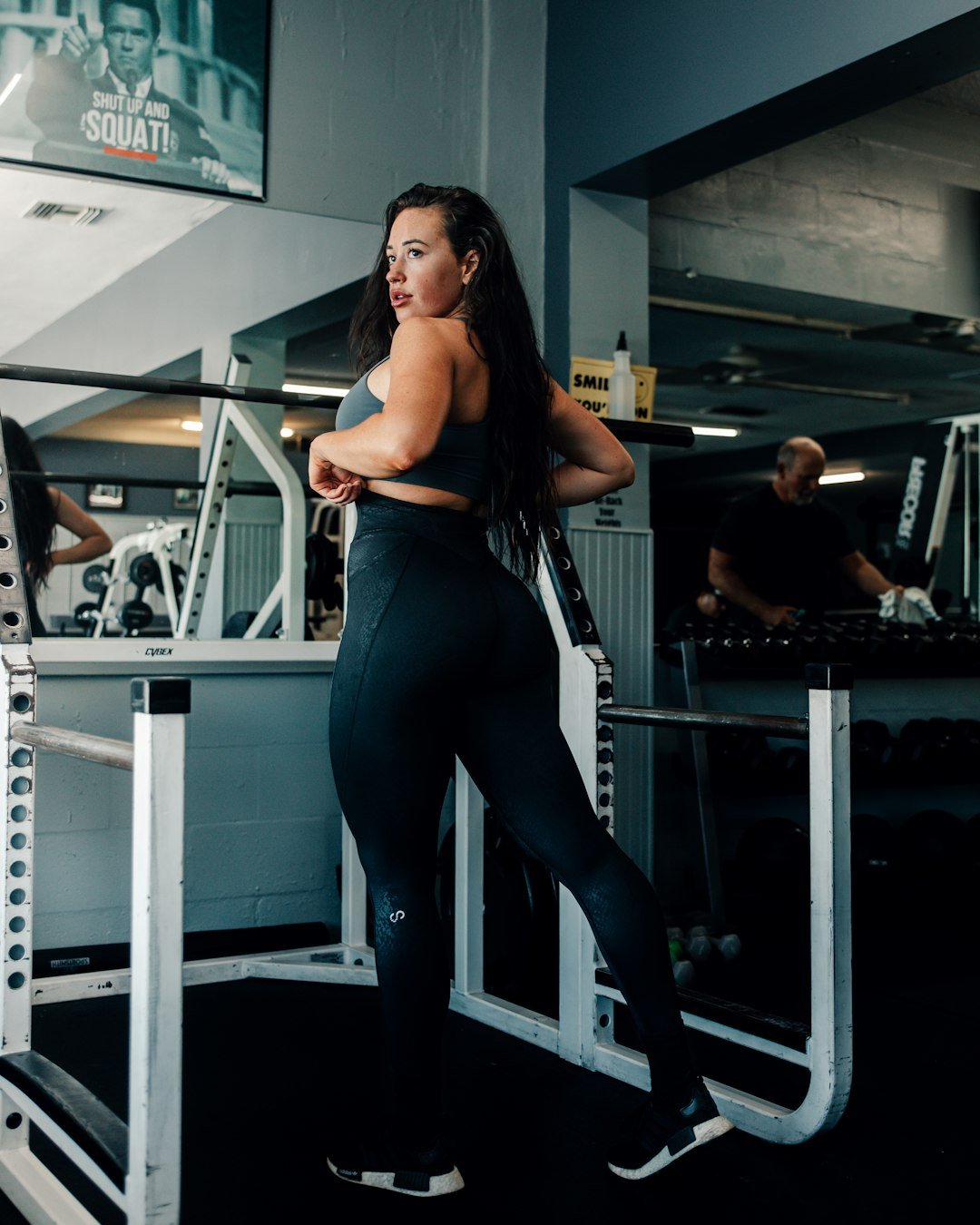
You’ve got 45 minutes before your next meeting, a gym bag in the trunk, and exactly zero tolerance for wasted time. The question isn’t whether you want to train — it’s whether a 45-minute strength training workout for busy people can actually move the needle or if you’re just going through the motions. The answer is yes, it absolutely can — but only if you structure it correctly. Most people either float through their session without a real plan or try to cram 90 minutes of volume into under an hour and end up doing neither well. This post breaks down exactly how to build a 45-minute strength workout that drives real results: more muscle, less fat, and consistent progress over time.
Why 45 Minutes Is Actually Enough (If You Use It Right)
Let’s kill the myth right away: longer workouts are not automatically better workouts. Training volume, intensity, and exercise selection matter far more than time spent in the gym. Research consistently supports the idea that most of the productive strength training stimulus happens within the first 45–60 minutes of a session. After that, fatigue accumulates, form breaks down, and the quality of each set drops significantly.
What kills most short workouts isn’t the time limit — it’s the lack of structure. Scrolling between sets, meandering between machines, doing three sets of curls because “it seemed like a good idea” — these are the real thieves of your training hour. A well-designed 45-minute session with intentional exercise selection, controlled rest periods, and progressive overload is more effective than an unstructured 90-minute wander through the weight room.
The goal is to maximize effective sets — those performed with enough intensity and load to actually challenge your muscles — not to maximize time under fluorescent lighting.
The Framework: How to Structure a 45-Minute Strength Session
Here’s the breakdown that works. Treat this like a template, not a rigid script. Your specific exercises will change, but the time allocation should stay consistent.
Warm-Up: 5 Minutes
Stop Reading. Start Doing.
Get a custom training + nutrition plan built for your body, your schedule, and your goals. Your first call is free.
Book Your Free Discovery Call →Skip the 10-minute treadmill jog. Your warm-up should prepare your joints and nervous system for the specific movements you’re about to perform — nothing more. Use a combination of dynamic mobility work and activation exercises targeting the muscle groups you’re training that day. If it’s a lower body session, hit hip circles, bodyweight squats, and glute bridges. Upper body day? Band pull-aparts, shoulder CARs, and a few light push variations.
Five minutes, purpose-driven, and done.
Primary Compound Lifts: 20 Minutes
This is the engine of your workout. Spend the bulk of your time on 1–2 heavy, compound movements — exercises that recruit multiple muscle groups simultaneously and allow you to move the most total load. Think squats, deadlifts, Romanian deadlifts, bench press, overhead press, barbell rows, and weighted pull-ups.
For a 45-minute session, structure your primary block like this:
- 1–2 compound exercises
- 3–4 working sets each
- Rest periods: 2–3 minutes between sets — don’t shortchange this on heavy compound lifts
- Rep range: 4–8 reps for strength, or 6–12 reps for hypertrophy
Progressive overload is non-negotiable here. Track your weights. Add reps or load week over week. If you’re not doing this, you’re exercising — not training.
Secondary Work / Accessory Supersets: 15 Minutes
Now you get efficient. Pair complementary exercises into supersets — two movements performed back to back with minimal rest between them. This maintains intensity while cutting down on dead time. Pair a push with a pull, a quad-dominant with a hip-dominant, or a primary mover with its antagonist.
Example pairings:
- Dumbbell incline press + seated cable row
- Leg press + lying hamstring curl
- Dumbbell shoulder press + face pulls
- Tricep pushdowns + EZ bar curl
Aim for 2–3 supersets, 3 sets each, with 60–90 seconds of rest between pairs. Keep reps in the 10–15 range here — these are accessory movements, not max effort sets.
Cool-Down: 5 Minutes
Five minutes of static stretching or controlled breathing. Hit the muscles you just worked, hold each stretch for 30–60 seconds, and use this time to mentally log how the session felt. This isn’t optional fluff — it’s how you maintain mobility and manage recovery over the long term.
Ready to Stop Guessing?
Get a coach who builds your program around YOUR schedule, goals, and preferences.
Exercise Selection: What to Prioritize and What to Cut
When time is limited, every exercise in your program needs to earn its spot. Here’s a simple filter: does this movement contribute meaningfully to my primary goal? If the answer is no, cut it.
Prioritize These Movement Patterns
- Horizontal push: Bench press, push-up variations, dumbbell press
- Horizontal pull: Barbell row, dumbbell row, cable row
- Vertical push: Overhead press, Arnold press
- Vertical pull: Pull-ups, lat pulldown, cable pullover
- Knee-dominant: Squat, lunge, leg press, Bulgarian split squat
- Hip-dominant: Deadlift, Romanian deadlift, hip thrust, good morning
- Core anti-rotation / stability: Plank, Pallof press, dead bug
A well-programmed 45-minute session hits 2–3 of these patterns thoroughly rather than all of them superficially. That’s the trade-off: depth over breadth.
What to Cut When You’re Short on Time
On days when you’re really crunched, cut the isolation work first — bicep curls, lateral raises, calf raises, and similar single-joint exercises. These movements have value, but they contribute the least per minute compared to compound lifts. You can always add them back when time allows. Never cut your compound movements and replace them with machines and isolation work — that’s a guaranteed way to stall your progress.
Sample 45-Minute Upper Body Strength Workout
Here’s what a real session looks like in practice. This is an upper body hypertrophy-focused day built on the framework above.
Warm-Up (5 min)
- Band pull-aparts — 2×15
- Shoulder CARs (controlled articular rotations) — 5 reps each direction
- Light dumbbell press — 1×15 at 40% of working weight
Primary Block (20 min)
- Barbell Bench Press — 4 sets x 6–8 reps @ RPE 8 | Rest 2.5 min
- Weighted Pull-Ups — 3 sets x 5–7 reps @ RPE 8 | Rest 2.5 min
Accessory Supersets (15 min)
- Superset A: Incline Dumbbell Press (3×10–12) + Seated Cable Row (3×12) | Rest 75 sec between sets
- Superset B: Overhead Tricep Extension (3×12–15) + EZ Bar Curl (3×12–15) | Rest 60 sec between sets
Cool-Down (5 min)
- Chest doorway stretch — 60 sec
- Lat stretch — 45 sec each side
- Seated thoracic rotation — 10 reps each side
That’s it. Focused, intentional, and done in 45 minutes. Every set has a purpose. Nothing is filler.
The Training Variables You Need to Actually Track
A 45-minute strength training workout for busy people only works long-term if you’re applying progressive overload consistently. Without it, you’re just maintaining — and maintenance-level effort rarely produces the physique changes most people are after.
Here are the key variables to track every session:
- Load (weight used): The most straightforward way to track overload. If you pressed 185 lbs for 3×6 this week, aim for 3×7 or 190 lbs next week.
- Volume (sets x reps x weight): Total weekly volume per muscle group is a strong predictor of hypertrophy. Most research points to 10–20 working sets per muscle group per week as an effective range for intermediate trainees.
- RPE (Rate of Perceived Exertion): A 1–10 scale that reflects how hard a set felt relative to your maximum. RPE 8 means you had about 2 reps left in the tank. Training consistently at RPE 7–9 on compound lifts is the sweet spot for progress without burnout.
- Rest periods: Keep them consistent. If you rest 3 minutes one week and 90 seconds the next, your performance data is meaningless.
The simplest habit you can build: log every workout. Use an app, a notebook, or a spreadsheet — the tool doesn’t matter. The data does. When you know what you did last week, you know exactly what you need to beat this week.
Key Takeaways
- A 45-minute strength session is more than enough time to drive real results — structure and intensity matter more than duration.
- Use the 5/20/15/5 split: warm-up, primary compound lifts, accessory supersets, and cool-down.
- Anchor every session around 1–2 heavy compound movements and build accessory work around them, not the other way around.
- Supersets are your best tool for maintaining volume when time is short — pair push/pull or antagonist muscle groups.
- Progressive overload is mandatory. Track your weights, reps, and RPE every session or your program has no direction.
- Cut isolation work first when time gets tight — never cut your compound lifts.
Get Expert Coaching That Actually Works
With Visiting Trainer, you get a Dietitian AND a Certified Personal Trainer for the price of one. Joe Ghafari and the team build custom programs for busy professionals who want real results without the guesswork.
Stop Reading. Start Doing.
Get a custom training + nutrition plan built for your body, your schedule, and your goals. Your first call is free.
Book Your Free Discovery Call →